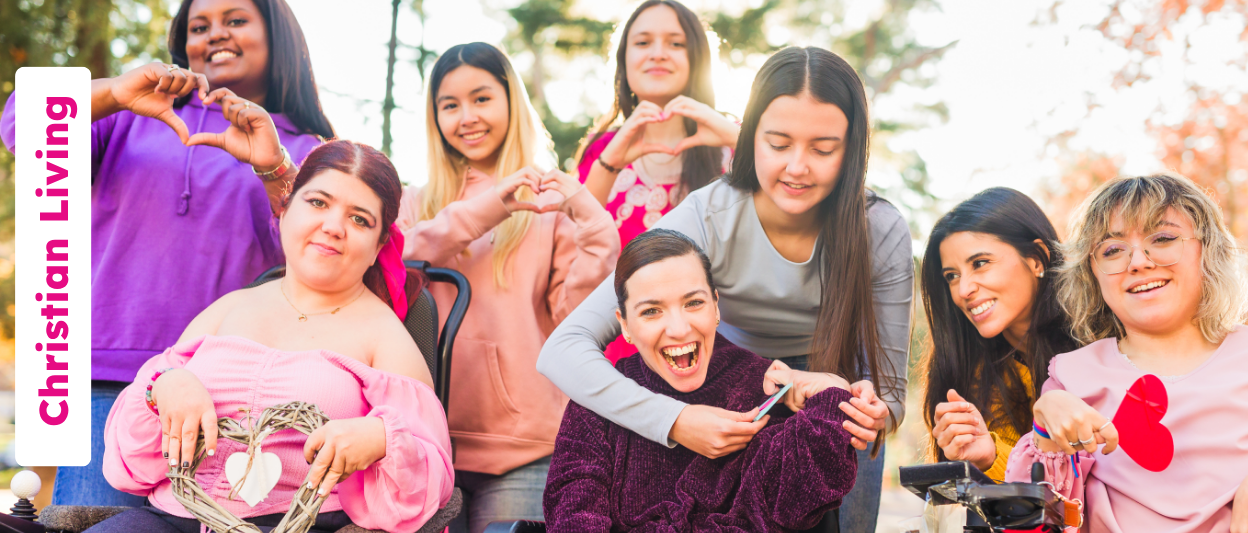
Recently, we asked how churches can better support people living with disability and their families. The response was overwhelming and deeply personal.
Key points:
- Readers living with disability and their families say the biggest barriers in church are often relational rather than physical, with many feeling ignored, unseen or unable to truly belong.
- Inclusion goes beyond ramps and accessible parking. It means welcoming people consistently, adapting to different needs and making space for everyone to participate and contribute.
- Not all disabilities are visible. Churches are encouraged to listen directly to people with disability and their carers, and to connect with organisations like Jesus Club Australia and CBM Australia for practical guidance and support.
The comments and voices in this article are drawn from responses shared publicly by our community on the Hope 103.2 Facebook page. We are grateful to everyone who took the time to share their experiences and perspectives.
Readers from across our community shared their own experiences. There were moments of genuine welcome, but also stories of exhaustion, invisibility and feeling completely overlooked. Several readers encouraged us to keep the conversation going by listening directly to the people who live this reality every single day.
So that is exactly what we are doing.
This follow-up brings together voices from our community alongside insights from organisations like Jesus Club Australia, which supports people with intellectual disability through church-based communities right across the country.
The biggest barriers are often relational, not physical
For many families, the hardest part of attending church is not finding a ramp or a car park, it is feeling invisible once they walk through the door.
Fiona, who attends church with her daughter, who has severe intellectual disability, put it plainly.
“When we do go to church, we are totally ignored. It is like they are scared of catching what she has.”
Others described churches that seemed friendly enough on the surface, but where nobody truly engaged with them, invited them into community or took the time to understand what they actually needed.
Hope 103.2 is proudly supported by
Geo said churches need to start by “really listening to the parents and carers who know the person better than any church does”.
For many families, inclusion is not mainly about programs. It is about belonging.
Accessibility is just the beginning
Ramps, accessible bathrooms and disability parking still matter enormously. But they are not enough on their own.
Real inclusion is about whether someone feels noticed, welcomed and genuinely part of the life of the church.
Jo shared some practical examples from her own community, including quiet spaces for children with disability, one-on-one helpers, and support groups for parents and carers that meet fortnightly for coffee, conversation and prayer. Others pointed to the importance of clear communication, predictable environments and a willingness to adapt, rather than expecting everyone to fit the same mould.
Helen’s advice was straightforward.
“Talk to people with disabilities directly and do not assume. Be willing to look at the systems that are so often barriers to inclusion, not just the physical spaces.”
Not all disabilities are visible
Several readers raised an important point that is easy to overlook. Disability is not always something you can see.
Jan, who lives with chronic ill health, said she often feels invisible in conversations about disability inclusion because discussions tend to focus on visible conditions or formal support systems.
Nicole noted that many people with hidden disabilities, including autism, ADHD, dyslexia and chronic illness, may not qualify for NDIS support but still need understanding, flexibility and genuine care from their church community.
People want to participate, not just be pitied
Perhaps the strongest theme across every response was this. People living with disability do not want to be cared for from a distance. They want to contribute, serve and belong.
Pamela put it beautifully: “If they are great worshippers and singers, make it easy for them to be on the stage. They have gifts, just as able-bodied people do”.
Organisations like Jesus Club Australia have spent years building communities where people with intellectual disability are not just attendees but active participants in the life of the church.
Michael Leader, pastor at Beverly Hills Baptist Church and coordinator of Jesus Club Beverly Hills, describes the program as filling a gap many churches do not know how to address.
“Jesus Club is designed especially for adults with an intellectual disability — it is like youth group and Sunday school rolled into one. They come and get it at their level, and they meet with other peers.”
For Michael, this is not just a program. It is a response to a genuine need.
“This is really an unreached people group. There are so many people who need to hear the gospel but who don’t always understand it at the level we often pitch at,” Michael said.
Jesus Club runs every second Monday night during school term, with groups meeting across Sydney and around the world. Michael says churches do not need to be large to make it work.
“Our church at Beverly Hills is a church of 70 people and this has been one of the best ministries we have ever run,” he said.
Where to start
Many churches genuinely want to do better but are not sure where to begin. Organisations like Jesus Club Australia and CBM Australia offer practical resources and community models to help. CBM’s Luke14 program, developed by people with lived experience of disability, was specifically mentioned by readers as a valuable starting point and includes a free video training series.
For many families, the change does not need to be dramatic. Small, consistent actions make a real difference, including greeting people by name every week, inviting them into community rather than just programs, training volunteers in disability awareness, creating quieter spaces when needed, listening without making assumptions and making room for people to serve, not just attend.
The conversation around disability and church inclusion is clearly much bigger than any one article. But the message from our community has been consistent. People living with disability and their families do not want to feel like outsiders. They want to be seen, included and valued as part of the body of Christ.
And that starts with us.
The voices in this article are drawn from public comments shared on the Hope 103.2 Facebook page. This article was researched and prepared by Hope 103.2 staff writers, with assistance from AI in its presentation. Final review and fact-checking was undertaken by our Digital Team prior to publication.
Feature image: Canva Pro
Get daily encouragement delivered straight to your inbox
Writers from our Real Hope community offer valuable wisdom and insights based on their own experiences!
"*" indicates required fields
Subscribe + stay connected with all
our latest stories
"*" indicates required fields
Hope 103.2 is proudly supported by
More from Christian Living