



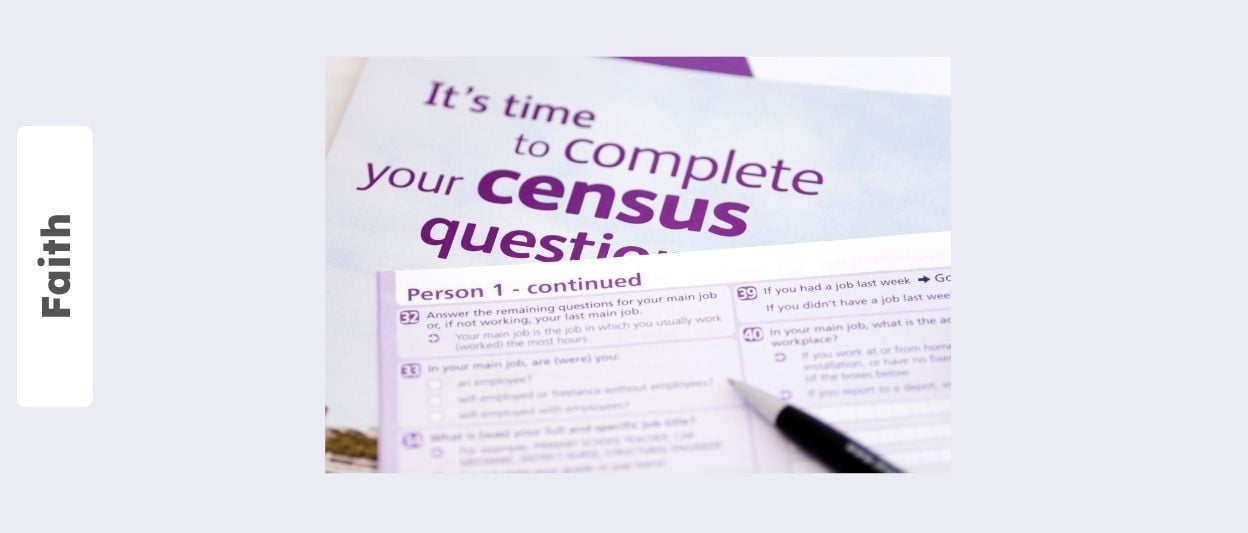
More than a box to tick: what the Census means for Christian identity in Australia
Key points:
- The Census doesn’t measure the depth of faith, but it does record how many Australians identify as Christian, shaping how that identity is recognised nationally.
- Christian faith has a visible public presence across churches, schools, hospitals, charities and community life, and the Census helps reflect that contribution.
- Answering the religion question is simply about identifying honestly, not about church attendance or proving the strength of one’s faith.
Every five years, the Census gives Australia a shared moment to reflect on who we are and how we live.
It is more than a statistical exercise. The Census helps governments, institutions and communities understand how Australia is changing, and how to plan funding, services and support for the years ahead.
For Christians in Australia, this matters.
Our faith is not simply a private belief. It shapes how we worship, serve, gather, raise families, care for others, build community and contribute to public life.
When the Census asks about religion, it is asking a question that connects directly with identity, belonging and the role faith continues to play in Australian society.
More than a box to tick
For many Christians, answering the religion question may feel straightforward.
Hope 103.2 is proudly supported by
If Christian faith is part of your life, your worship, your community and your understanding of who you are, then the Census is one way that identity is recognised in the national picture.
But the question still matters.
The Census does not measure the depth of anyone’s faith. It cannot capture prayer, discipleship, service, church life, generosity, conviction or devotion.
What it can do is record how many people in Australia identify with Christianity.
That makes the question important, because what is recorded helps shape how Australia understands its communities.
Faith has a public presence
Christianity in Australia is lived out in many visible ways.
It is seen in churches, schools, hospitals, aged care, charities, chaplaincy, community services, crisis support, family life and everyday acts of service.
It is present when Christians gather for worship, care for neighbours, support the vulnerable, educate children, visit the lonely, pray in times of hardship and serve their local communities.
The Census helps show that faith is not absent from Australian life. It remains part of the story of who we are.
Why visibility matters
Census data informs how governments, organisations and communities understand the nation.
Religious identification data contributes to the broader picture used in planning services, understanding community needs, supporting cultural and social research, and recognising the role different communities play in public life.
If Christian identity is under-recognised in the data, the contribution and presence of Christian communities can become less visible in the national conversation.
This is not about seeking special treatment.
It is about truthful representation.
Answering with clarity
For Christians, the Census is an opportunity to answer clearly and thoughtfully.
The religion question is not asking how often you attend church, how strong your faith feels, or whether you meet someone else’s standard of religious commitment.
It is asking how you identify.
For those who identify as Christian, the answer matters because it contributes to a fuller and more accurate picture of Australia.
Helping others understand the question
Many Christians also have family members, friends or neighbours who may have a connection to Christianity, even if they are unsure how to answer the religion question.
Some may have been shaped by Christian family, schooling, community, prayer, tradition or values, but may not immediately think of themselves as “religious”.
The religion question is not asking how often you attend church, how strong your faith feels, or whether you meet someone else’s standard of religious commitment. It is asking how you identify.
This is not something to force or assume.
But it may be something worth discussing gently and honestly.
The aim is not to persuade people to choose an answer that does not feel true. It is to help people understand the question and respond in a way that reflects their own story.
A moment for reflection
The Census gives each person a simple but meaningful opportunity to reflect.
What is my faith?
How do I identify?
What story does my answer tell?
For Christians, this is a chance to be counted clearly as part of the national picture.
Not defensively. Not politically. Not to make a point.
Simply truthfully.
A broader picture of national identity
Australia is changing, and so is how people understand belief and identity.
The Census doesn’t resolve these complexities, but it does record them. Those records shape how Australia understands itself over time.
For Christians, this isn’t about defending a position. It’s about being clear on how our identity is communicated in the public square.
Because in the end, the Census is not just about categories.
It is about people, stories, and how a nation learns to understand itself.
And that is something worth getting right.
Census night is Tuesday 11 August 2026. Find out more here.
Feature image: Canva Pro
Get daily encouragement delivered straight to your inbox
Writers from our Real Hope community offer valuable wisdom and insights based on their own experiences!
"*" indicates required fields
Subscribe + stay connected with all
our latest stories
"*" indicates required fields
Hope 103.2 is proudly supported by
More from News