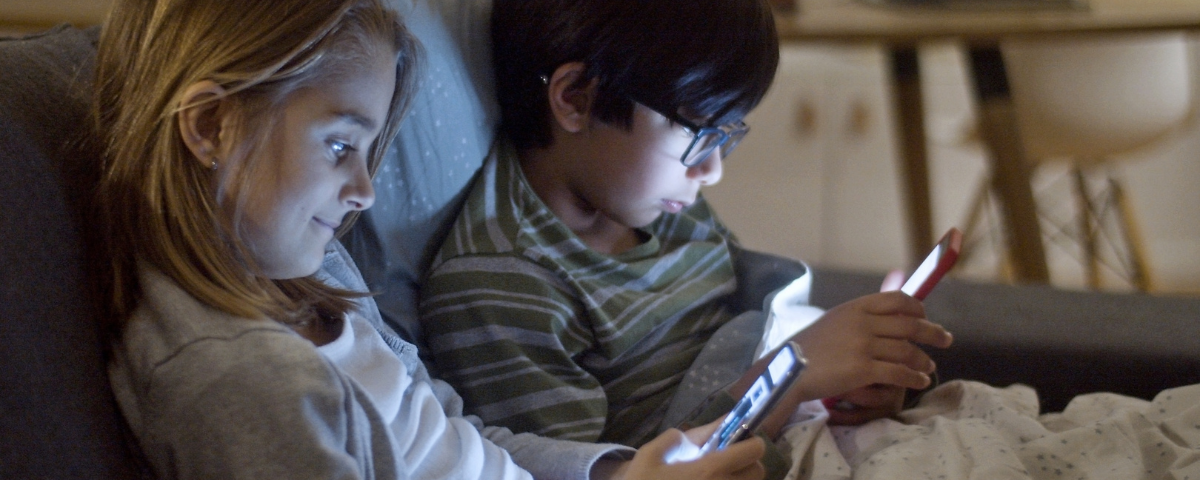
“Why can’t my child sit still anymore?”
Key points:
- Technology is not inherently harmful, but constant stimulation and instant rewards will shape how children engage with learning and everyday life.
- You may notice signs of attention difficulties in your child if they are prone to frequent task-switching, reduced patience for offline activities and increased frustration when screens are unavailable.
- As parents, you can help your children build stronger concentration skills by modelling mindful technology use yourselves, and making space for boredom, imagination and real-world experiences.
If you’ve ever watched your child bounce between apps, skip through YouTube videos after five seconds, or struggle to finish a simple homework task, you’re not alone.
Many parents and teachers are noticing it:
Kids today seem more distracted.
More restless.
More easily bored.
So what’s going on?
While attention challenges like ADHD are better understood and more widely diagnosed today, there’s growing concern that our digital lifestyles, especially early and frequent screen exposure, may be reshaping the way young brains focus, engage, and process information.
Let’s explore what the research says.
What is “attention span” anyway?
Attention span refers to how long someone can focus on a task without becoming distracted. It’s a key part of learning, memory, emotional regulation, and problem-solving.
For children, attention develops with age. But in the digital era, something has shifted.
Hope 103.2 is proudly supported by
What the research is showing
1. Heavy screen use is linked to reduced attention
A 2018 study published in JAMA tracked more than 2,500 adolescents over two years. It found that teens who used multiple forms of digital media (e.g. texting, streaming, gaming) several times a day were significantly more likely to develop symptoms of attention disorders.
This isn’t just about the amount of screen time, but the type of content consumed and the pace at which it moves.
“Our brains are not wired to process rapid-fire shifts in attention constantly,” explains Dr. Michael Rich, pediatrician and director of the Digital Wellness Lab at Boston Children’s Hospital.
2. Fast-paced media may be rewiring young brains
Apps like TikTok, Instagram Reels, and YouTube Shorts are designed to deliver instant gratification, dopamine hits from quick, high-stimulation content. Over time, this can make slower-paced tasks (like reading, writing, or listening in class) feel unbearably boring by comparison.
This contributes to something called attention fragmentation, where a child’s ability to sustain focus is compromised because they’ve adapted to jump from stimulus to stimulus.
3. Children’s attention spans are shrinking, but the full picture is complex
A study from Microsoft once claimed that the human attention span had shrunk to 8 seconds (shorter than a goldfish). But this stat has since been debated and criticized for oversimplifying a complex issue.
What’s more accurate is this: Kids are becoming more selective in what they pay attention to.
They can focus for long stretches, on things that offer novelty, fast feedback, or intense engagement (like video games). The challenge lies in sustaining attention on non-stimulating, non-rewarding tasks.
So… is technology to blame?
Partially.
Technology isn’t the enemy. In fact, it can support learning, creativity, and connection when used wisely. But the way it’s designed, and the amount of exposure, can condition children to expect:
- Constant stimulation
- Immediate rewards
- Zero boredom
And when real life doesn’t deliver those things? Their attention disengages.
Signs your child may be struggling with attention (tech-related)
- Constant need for stimulation or background noise
- Struggles to finish homework or reading without distractions
- Frequently switches between apps, tabs, or tasks
- Meltdowns or irritability when screens are removed
- Decreased ability to play imaginatively or independently
What parents can do
You don’t need to ban screens. But you do need to create boundaries and balance.
1. Designate slow time every day
Encourage activities that require sustained attention: puzzles, reading, drawing, unstructured outdoor play. Start small- 10 minutes of uninterrupted focus is a win.
2. Delay exposure to fast-paced media
For younger children, limit short-form content (like TikTok, YouTube Shorts) that trains the brain to expect instant hits of stimulation.
3. Practice tech-free transitions
Build in buffer time between screen time and tasks like schoolwork, bedtime, or meals to help the brain recalibrate.
4. Model digital mindfulness
Your habits matter. If you’re checking your phone every 30 seconds, your child is watching and learning.
5. Use screens with purpose, not passively
Ask: Is this content helping my child learn, connect, or create? Or is it just numbing boredom?
Our children’s attention spans are being shaped by their environment, their routines, and yes, their screens. But also by the presence, patience, and structure we offer as parents.
Technology isn’t going away. But neither is the power of boredom, imagination, or a story told without a screen.
The goal isn’t to eliminate technology. It’s to make sure it doesn’t replace the experiences that help our kids grow, think deeply, and pay attention to the world and people around them.
Feature image: Supplied (Canva)
Get daily encouragement delivered straight to your inbox
Writers from our Real Hope community offer valuable wisdom and insights based on their own experiences!
"*" indicates required fields
Subscribe + stay connected with all
our latest stories
"*" indicates required fields
Hope 103.2 is proudly supported by