Things that seemed so predictable are being challenged.
Almost everything feels like it has a measure of risk.
But even in more “normal” times, risk and how we deal with it, are part of life.
As a follower of Christ, the challenge is not to avoid risk.
Rather, often it can be about distinguishing times when we need to demonstrate caution, and times when we need to find courage.
Thinking about risk
While insurance can help us manage a car accident, a health problem, a house fire or a burglary, there are broader questions of risk that Christians confront regularly.
It’s true that putting in place responsible strategies to protect our assets is an act of stewardship, but how do we approach the potential opportunity that often lays on the other side of risk?
Hope 103.2 is proudly supported by
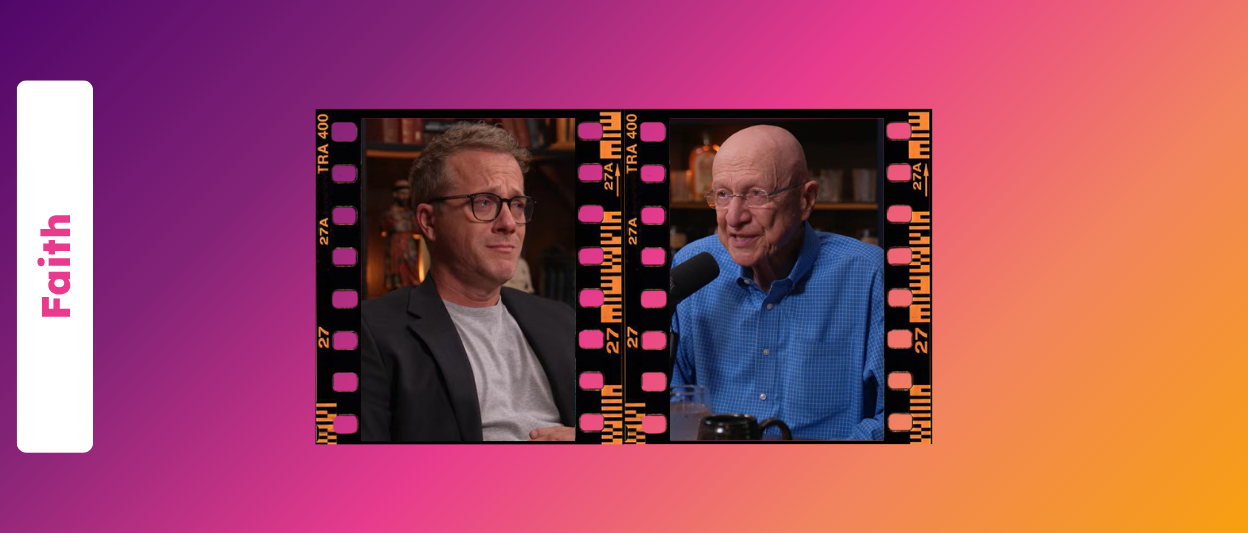
I turned to Chris for advice.
In his professional life, Chris spent decades assessing risk and opportunity and applying risk models to business — mostly financial — problems.
Beyond that, Chris has spent more than 30 years also exploring deeply what it means to live as a follower of Jesus, particularly in life’s economic aspects.
Risk and responsibility
Much of Chris’ professional life was working in the superannuation industry, including advising his client funds on insurance issues, and working closely with colleagues in the insurance industry.
Insurance is probably the area of financial risk and mitigation that is most familiar to us.
The ability for us all to pay a regular premium provides reassurance if the unexpected catastrophe occurs — like a house fire, a car accident or health emergency.
That can help to reduce the financial impact on us and our families.
What many people don’t realise is that Christians were among the first to establish insurance.
“Many early insurance products were established by Christian philanthropists and self-help groups to provide support to families in the case of death and sickness — particularly for those without reserves of wealth.” Chris said.
“Ensuring we have made proper provision for our own needs and those of our family and others dependent on us is something the early Christians understood.
“If people become sick, unproductive and are financially ruined — that doesn’t bring God glory.”
God saw the very creation of our being as a risk worth taking.
God was prepared to risk our turning away from him if it meant there was a chance we could have a genuine relationship with him.
The thought of this is inescapably beautiful in my mind.
If we understand that God himself is willing to take a risk and make an investment in us, how does this influence the way we live?
God desires us to put our assets to work
There are many examples in the Bible of God’s investment in us, and he anticipates a return.
Our intellect, our time, our home, our money — these are assets in God’s economy that he has entrusted to us.
In the same way that God gave Adam and Eve the responsibility of looking after the Garden of Eden, God gives us responsibility to grow and flourish with what we have at our disposal.
The Parable of the Talents (Matthew 25) and the Parable of the Sower (Matthew 13, Mark 4, Luke 8) both describe the desire of God to see a harvest — perhaps as much as a hundredfold — which builds God’s Kingdom.
But as with any productive endeavour, it is likely to involve risk.
Likely to require us to explore what those gifts are, to be willing to invest in others without certainty of return, and perhaps even the risk they will disappoint us.
It may mean pursuing ministries and activities which are difficult or even unappealing (trip to Nineveh, anyone?).
When do we find the courage to pursue a new ministry, activity, or work that has a deal of risk alongside it?
Alternatively, when do we hold back, pursue caution and perhaps wait, or plan for the future.
How do we act cautiously, plan for the future, but still trust God?
Is it OK to save for the future?

For many of us, a savings account and retirement fund are important parts of modern-day life.
In the same way that Joseph in the Old Testament stores up grain ahead of famine, these are modern strategies that help Christians plan for uncertainty.
But there is also an uncomfortable edge to Jesus’ words.
In Luke 12 we read the parable of the Rich Fool.
We see a picture of a rich man who accumulates so much wealth that he tears down his barns to build “bigger barns” that will store it.
We also see God’s judgement on this “fool” who has spent his time investing in his own future, but not God’s plan.
I ask Chris how we should view this parable. Especially when we compare it to Jesus’ own words in Matthew 6: “[D]o not worry about your life, what you will eat or drink; or about your body, what you will wear. Is not life more than food, and the body more than clothes?” (Matthew 6:25–34).
Is Jesus asking his followers to simply trust God in the moment and not worry about the future?
Does our modern day need to “plan” and “control” contradict this teaching?
“In the example of the rich fool — he built bigger barns and his attitude was ‘I’ve looked after everything.. I can eat, drink and be merry,'” Chris said.
“The problem is he was ignoring the fact that provision he was making was going to be lost if it wasn’t to be invested in some higher purpose… he just wanted his own life to be easy.
“On the other hand, complete improvidence isn’t wise.
“If this is the case, we end up being reliant on others.
“The [Good] Samaritan was able to care for the stranger because he had acquired means. There is a balance to achieve in the way we do this.”
It’s true that God wants us to trust him, not to worry about our daily needs.
More fundamental, though, is God desires that His Kingdom is our first priority.
Planning for our future, caring for our family and providing for our needs are things that must recognise God’s providence above all.
Most of all, we are called to do this in a way that continues to value and pursue His Kingdom above our own.
Avoiding greed
One of the most significant things we can do to avoid greed is to give.
As someone who believes passionately in the importance, discipline and opportunity of giving, I honestly believe giving is perhaps one of the boldest declarations we can make about our faith in God.
Our giving reflects not only the people, ministries and causes we care about, it’s also a reflection of our understanding of God’s character.
It reflects our understanding of the ways God provides for our own needs and the responsibility that imposes on us to also care for our neighbour.
Matthew 6 makes it very clear that our wealth may help us mitigate risks and uncertainty — to live wisely — but storing up treasures for our own sake should not be our aim.
John Cortines and Greg Baumer in their book God and Money take a very helpful approach to drawing a line on what we need for our future.
They advocate strongly that giving is an essential part of Christian living:
According to Cortines and Baumer, being able to give significantly is a discipline we need to plan for.
Rather than giving small portions out of our abundance, Cortines and Baumer challenge every follower of Christ to think seriously about our needs and give away everything beyond that.
Their advice is to save some money, to spend wisely and to give generously.
Not only should this exercise look at our income and our expenses, it needs to be applied to our assets too.
We need to recognise when we have enough for our own needs and release more resources into God’s Kingdom.
In a world where each pay increase tends to correspond with an increase in spending, Cortines and Baumer challenge us to find a finish line.
To draw a line at the point where our needs are fully met and assets are sufficient and to give away everything above the “finish line”.
Should Christians take more risks?
Sometimes we recognise that being truly obedient to God will require us to take a measure of risk.
After all, that’s what faith is!
I ask Chris if Christians in Australia need to be taking on more risk.
“It’s easy for the Christian community to be a place of comfort within the walls of the church, rather than being outward looking,” Chris said.
“If that’s happening, if we’re just building places of comfort for ourselves, then we do need to take more risks.
“The church can often do more.
“We should be looking at people who model what Jesus did.
“People who serve the ‘down and out’ end of society, those who have no alternative but to take risks just to survive.”
Our own comfort may be rarely challenged yet our neighbours’ plight is often so desperate.
Are we willing to risk some of our own comfort for the sake of our neighbours?
Ultimately, how should we think About risk?
The very example of God sending his son Jesus to earth was an extraordinary risk, but it offers all of us true meaning for this life, as well as eternal salvation.
Our following of Christ is to recognise that a Christian life carries expectation that we will use productively what we have to advance God’s Kingdom.
It means being wise. Being able to see the risks and to proceed where God is leading us — even when the outcome is uncertain.
Although fear can often hold us back from taking action, God’s very example should encourage us to be willing to risk more of ourselves, our abilities, our time and our resources for his kingdom.
The opportunity for both this life and eternity is surely worth it.
Article and podcast supplied with thanks to Ben Allsop.
About the Author: Ben Allsop lives and works in Melbourne, Australia, and is passionate about helping people find the connections between faith, finance and philanthropy.
Feature image: Photo by Towfiqu barbhuiya on Unsplash
Get daily encouragement delivered straight to your inbox
Writers from our Real Hope community offer valuable wisdom and insights based on their own experiences!
"*" indicates required fields
Subscribe + stay connected with all
our latest stories
"*" indicates required fields
Hope 103.2 is proudly supported by
More from Faith