Update your browser or Flash plugin
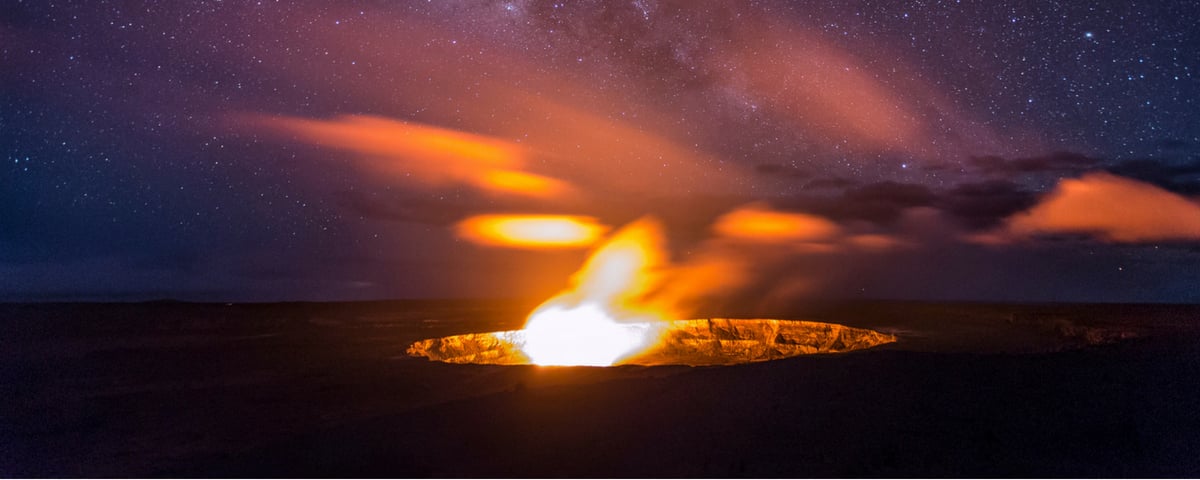
Volcanic activity is dramatic, and often deadly. The eruption of Hawaii’s Kilauea Volcano over the last several months has been spectacular and has fortunately caused only property damage. Sadly, the eruption of Guatemala’s Volcan de Fuego, or (Volcano of Fire) was more explosive and unpredictable and killed perhaps 300 people, destroyed communities and caused the evacuation of 3,000 people.
The Kilauea Volcano is the purported home of Hawaiian goddess, Pele, and has actually been erupting continuously for the last 35 years. It is closely monitored by the US Geological Survey, whose website for the Hawaiian Volcano Observatory includes 24-hour live webcams, maps and photos online.
Dangerous ‘lava selfies’
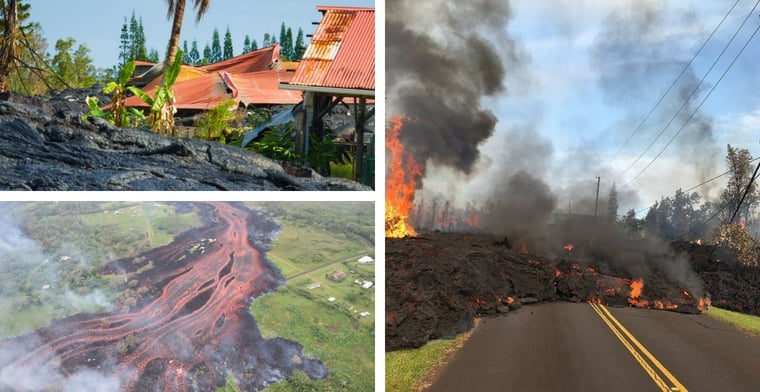
The recent uptick in activity on Kilauea is being widely reported, thanks to the accessibility of the location and the mostly slow movement of the lava. There are reports that some of the bigger explosions since mid- June have caused it to rain down tiny green semi-precious stones. There are also concerns that locals have become a little blasé about the danger, with many people risking their lives to get the perfect ‘lava selfie’ with a some molten lava flowing in the background.
Undersea volcanoes
Remarkable as the reports from Hawaii are, it is not really where all the action is, volcanically speaking. Emeritus Professor Richard Arculus, from the Research School of Earth Sciences at ANU is a world-leading expert on volcanoes. He told Stephen O’Doherty on Open House that under the sea is where it is all at.
Longest recorded eruption
“Most volcanic activity takes place under water on mid ocean ridges encircling the globe. Generally it doesn’t hurt anyone (apart from the lifeforms that live along those ridges) and doesn’t destroy any property” says Professor Arculus.
But that’s not to say that things are not happening out of the water. “On an average, every week of the year on land there are about 20 volcanoes active somewhere. The Kilauea eruption has been going since 1983, so that is 35 years. It is the longest know historic, recorded eruption. A great tourist attraction really.” he says.
Hope 103.2 is proudly supported by
Gift that started it all
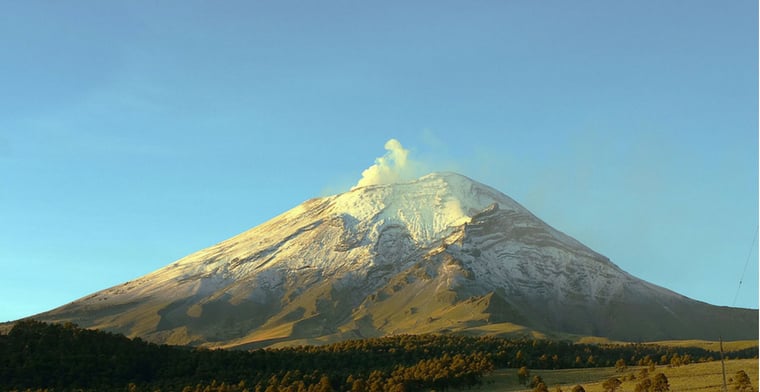
It was a children’s book given to him by his parents that first caught the imagination of Professor Arculus. It included a picture of Popocatépetl which overlooks Mexico City. He was intrigued by the name and a passion began. Popocatépetl can easily be seen from the crowded Mexican capital city on a clear day. It is considered one of the world’s most dangerous volcanoes because of its proximity to the 21.3 million residents of Greater Mexico City.
A word with dad
Professor Arculus began his professional involvement with volcanoes as a Ph. D. student at Durham University where his project was to map the volcanic island of Grenada. He says he sensibly took the advice of his father.
“I had a conversation when I was 16 years old with my father who was a mathematician, an accountant and spent much of his life in an office.” Revealed Professor Arculus.
“We had gone to a Cumbria beauty spot, a wonderful place called High Cup Nick. and sitting on a layer of rock which had been produced through volcanic activity 300 million years ago. He said to me ‘Richard if I could have my life over again I would try and choose an occupation that kept me in the open air.’”
More Hawaiian Islands to come
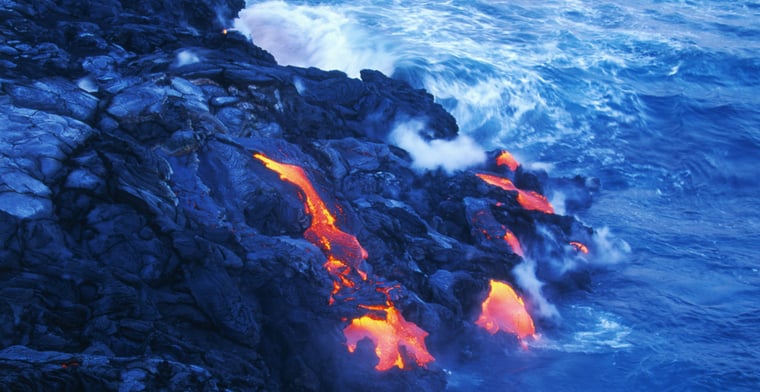
The whole chain of Hawaii was formed by the sort of volcanic activity active that is happening with Kilauea. Richard Arculus says there is a new island forming right now. “Just to the south of the Big Island, there is one called Loihi, which is yet to break the surface, but it will become the next island and in time people will be able to visit.” he says. The US Geological survey has warned of the danger of swimming or walking near where the Kilauea lava meets the sea. Apart from lava balls and glass shards there is the danger of exposure to acidic steam, called ‘laze’.
Volcanic plumbing systems
Professor Arculus explained on Open House that the Hawaiian volcanoes are due to ‘hot spots’ on the earth’s crust and not connected to the volcanoes of the famous ‘Ring of Fire.’ He describes the two types of volcanoes as having what amount to “Different volcanic plumbing systems.
“The ‘Ring of Fire’ volcanoes are linked to the destruction of oceanic crust; the so-called tectonic plates that are made at the mid ocean ridges.” says Professor Arculus.
Cooling earth’s core
“If you are making new crust on a constant volume earth. you have to get rid of it someway. So it generates magma and those are the volcanoes such as Fuego in Guatemala that has been active in the last month or so. That is completely independent to the hot spots like Hawaii. Those [Hawaiian volcanoes] actually, intriguingly are probably the way the earth’s core is cooling itself.” he says.
Fault lines do not a volcano make
“Where the plates slide by each other, such as the San Andreas Fault in California or the Alpine Fault in New Zealand, that doesn’t cause any volcanoes. You can slide plates horizontally by each other and that doesn’t generate any magma.” Professor Arculus explains.
The fizzy drink analogy
“In other cases like in the ‘Ring of Fire’ the edges of the plate have been sitting on the sea bed and become hydrated. That changes how it reacts and it becomes highly explosive when magma stats flowing.” he says.
“It’s like taking the top of a carbonated beverage. The bubbles form and you can see lots of fragmented material and it is highly explosive. That’s why Fuego is so much more explosive than the volcano in Hawaii.” says Professor Arculus.
Raining gems?
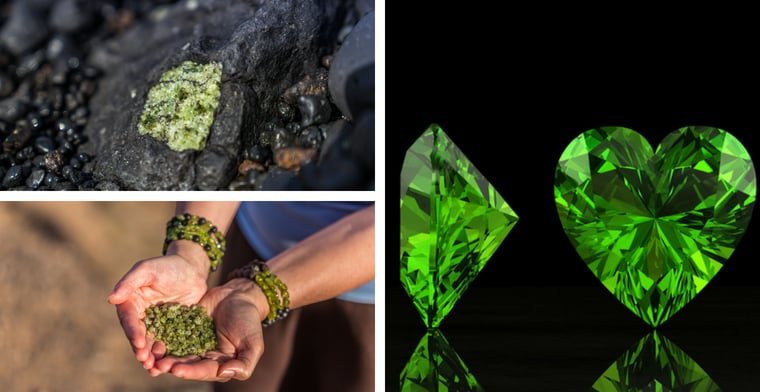
There have been stories that Kilauea has been literally ‘raining gems’. People have apparently been collecting small green shiny stones, called olivine from near Kilauea. Professor Arculus took us through how such an extraordinary thing could happen.
“When you cool magma or lava the first major silicate mineral to form is called olivine, it can form semi-precious gems called peridot. In fact, the rock that makes up the earth’s mantle, at least at shallow levels, is called peridotite, because the major mineral is olivine. Olivine is this beautiful, light green colour and is especially colourful when you get slight explosive activity” says Professor Arculus.
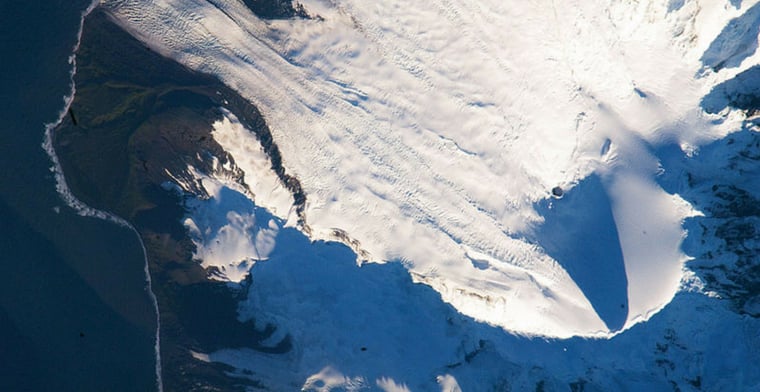
Heard island as seen from the International Space Station
Australia has a pretty good smattering of extinct volcanoes like Mt Canobolas, near Orange in NSW, Mt Macedon in northern Victoria and the Warrumbungles mountain range in NSW. Not forgetting the dormant, Mt Gambier – sorry South Australia – it has only been 5,000 years.
Surprisingly, Australia also has two active volcanoes. They are on the Australian external territories, Heard Island and the neighbouring McDonald Island.
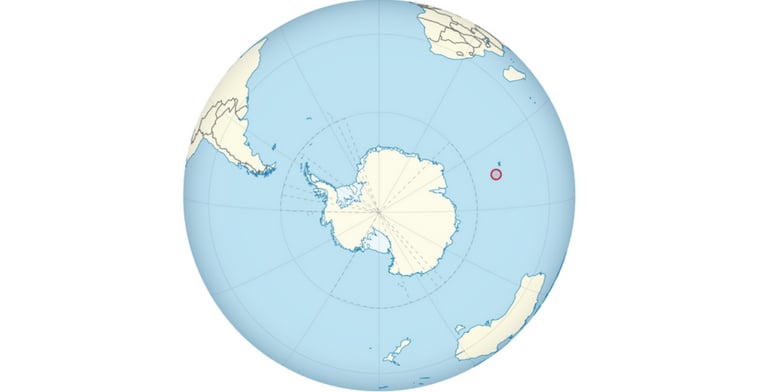
Professor Arculus was co-chief scientist of a research voyage that explored the submarine activity there. it is not a journey to be undertaken lightly the islands are uninhabited and among the most remote places on Earth.The islands are approximately 4,099 km southwest of Perth, 4,200 km southeast of South Africa, and 1,630 km north of Antarctica.
“Australia is the the proud owner of two active volcanoes. One is Big Ben on Heard Island in the Southern Ocean. It has got an neighbour 50 kilometres to the west on McDonald Island. They are part of a hot spot that can be traced all the way back to the corner of Myanmar and India.” explained Professor Arculus.
To listen to the podcast of this conversation click the red play button at the top of the page, or you can subscribe to Open House podcasts in iTunes and they will appear in your feed.
Get daily encouragement delivered straight to your inbox
Writers from our Real Hope community offer valuable wisdom and insights based on their own experiences!
"*" indicates required fields
Subscribe + stay connected with all
our latest stories
"*" indicates required fields
Hope 103.2 is proudly supported by
More from News