Subscribe to the ‘Morning Devotions’ podcast

Transcript
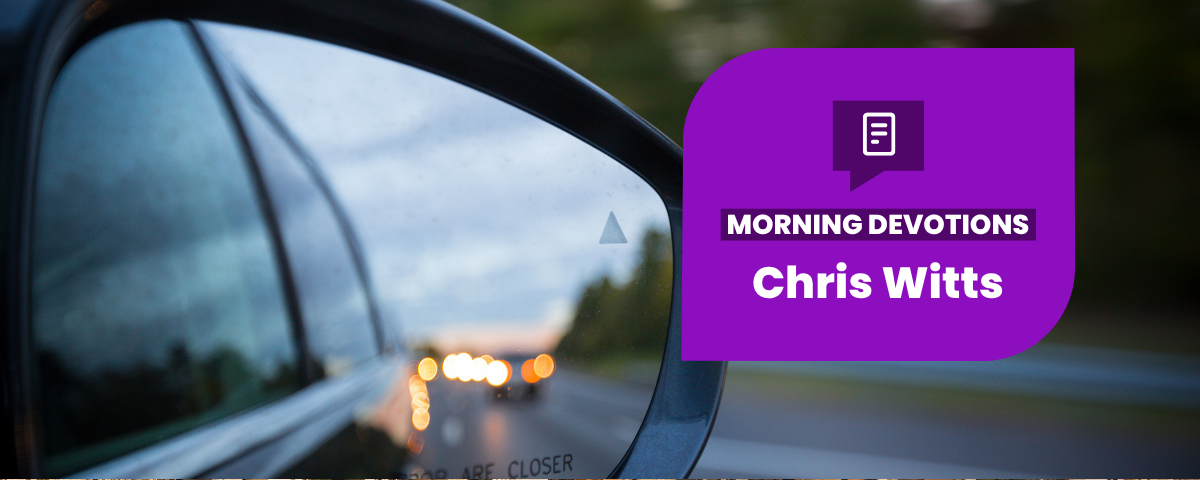
Have you ever been driving and getting ready to switch lanes, thinking it’s clear, and you turn your head to double-check and realise there’s actually a car driving in the lane next to you? I know that’s happened to me a few times. That’s one example of our blind spot, also called the scotoma.
Some ophthalmologists don’t agree, but it seems to be general knowledge that we do have a blind spot in our eye – I say thank goodness for the side-view mirrors. They can save a lot of trouble and expense. We usually aren’t aware of this blind spot because our brain fills in this blank area with the surrounded images, making our vision field appear seamless.
We can enlarge this topic to most of life as well. We each have plenty of blind spots in other areas of life we may not be aware of – it may be a psychological blind spot – some issues in our personality that are hidden, not only to others but to ourselves. I’m talking about our character traits or failures we’re too ashamed to think about. We have a strong urge to protect our own reputation for fear of being found out.
It’s too hard to face up to them. We do not want to recognise some of these traits – but life is all about personal growth and development. We never stop learning. We can see blind spots in other people. The problem is we can’t see them in ourselves. You can safely assume you have blind spots in your life that are causing problems and still in need of restoration.
What are your blinds spots? How are you going to become aware of them?
Our blind spots can take different forms. Blind spots may be spiritual and block our relationship with God. They may be relational and block our relationships with others. They could also be physical and block health and wellness. These spots can be hard to see, but they wreak a lot of havoc. The Bible gives us several examples of people with blind spots. The example I want to show you today is the Apostle Paul. When he was still called Saul, he was a terrorist who targeted early Christ-followers. His blind spot was religious zeal, taken to the extreme. This blind spot was a giant barrier to the life God wanted him to live.
Saul was walking on the road to Damascus with his cohorts to arrest more followers of Jesus. He had been walking in spiritual blindness for a long time, but on the Damascus road, God struck him with literal blindness after an encounter with Jesus himself. Read about that in Acts 9.
Saul’s literal blindness lasted for three days. Then God sent Ananias to Saul. Ananias prayed over Saul, telling him that God wanted to fill him with the Holy Spirit. At that moment:
Hope 103.2 is proudly supported by
“Instantly something like scales fell from Saul’s eyes, and he regained his sight. Then he got up and was baptized.” (Acts 9:18 – NLT)
Soon after Saul’s healing from spiritual blindness, he stepped into the calling God had prepared for him. We still benefit from Saul’s transformation into the Apostle Paul.
His letters make up the majority of the New Testament, and they have blessed millions of Christians in the past 2000 years. Since God removed his blind spot, we have all reaped great benefits in our spiritual lives!
Saul needed God’s help to see his blind spot. Only God has the power to remove a blind spot from someone’s life. When we see our own blind spots, we must also rely on God’s help to overcome them, because in our own strength we will fail. When we see blind spots in others, we have to trust God to remove them instead of trying to fix the person with the problem.
And that can be quite a challenge! We could be blinded by our own sense of arrogant entitlement – it’s called self-centredness. I want everything in life to go my way – I am no.1. This blind spot can be removed by God’s help, replacing it with a genuine spirit of humility. Humility doesn’t climb over others. It reaches out to connect with others, appreciating them for who they are, not for what they can do for you.
A humble person doesn’t use everything within himself to further his own cause, but rather he desires to use whatever strength or position he has to help others and meet their needs. As a result, the relational blind spot is removed, giving him access to a rich life full of valuable connections with family and friends.
The Bible says, “Humble yourselves under the mighty power of God, and at the right time, he will lift you up” (1 Peter 5:6). Our Heavenly Father is in the business of removing blind spots. It’s only His power that can do such a thing. Left to our own devices we struggle and will fail.
Here is a verse from the Old Testament worth praying:
“Point out anything in me that offends you, and lead me along the path of everlasting life” (Psalm 139:24 – NLT).
Remove from my life the blind spots that need to go – make it your daily prayer.
Feature image: CanvaPro
Get daily encouragement delivered straight to your inbox
Writers from our Real Hope community offer valuable wisdom and insights based on their own experiences!
"*" indicates required fields
Subscribe + stay connected with all
our latest stories
"*" indicates required fields
Hope 103.2 is proudly supported by